

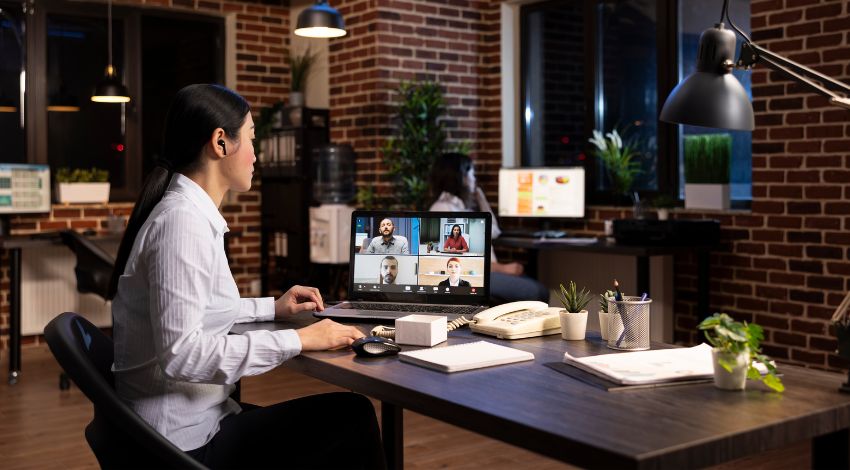
As businesses scale, one of the biggest decisions leaders face is determining how to build a team: hire local, in-house employees or leverage remote staffing models. It’s a question that’s become even more relevant in the past decade as companies reassess operating costs, workforce flexibility, and the efficiency of each role. Many are turning to remote staffing solutions because of their measurable impact on productivity, overhead savings, and long-term scalability. Still, in-house teams maintain their value for certain functions.
If your business is growing and you’re weighing in-house vs remote employees, the real question becomes: Which approach delivers the best ROI, not just this quarter, but long-term? Let’s break down how businesses can compare these two staffing models strategically and make decisions that support continued growth.
The True Cost of Hiring In-House Employees
For decades, in-house employees have been the default choice for most companies. Full-time, on-site staff offer a sense of structure, collaboration, and reliability. But as businesses scale, costs increase often faster than revenue.
Hidden Costs of In-House Staffing Include:
- Salaries + annual raises
- Payroll taxes
- Benefits (health insurance, paid time off, etc.)
- Physical office space
- Equipment and technology
- Onboarding and HR administration
- Training and turnover costs
Even for small businesses, the overhead associated with hiring local talent can exceed the actual salary by 25%–40%. A $50,000 employee may realistically cost closer to $70,000 once all expenses are included.
This isn’t to say in-house staff isn’t valuable; many roles truly benefit from physical presence or close team alignment, but the ROI varies depending on company goals, budget, and operational structure.
The Rise of Remote Staffing Solutions
Remote teams have moved far beyond being a trend, they’re now a strategic pillar for thousands of companies. From startups to global brands, businesses are realizing that the right remote talent can deliver equal (and sometimes greater) output with a fraction of the cost and logistical burden.
Why Remote Staffing Solutions Are Growing Rapidly:
- Access to global talent pools
- Lower overhead and administrative costs
- Greater flexibility in scaling teams up or down
- Faster hiring timelines
- Ability to cover additional time zones and extended business hours
- Stronger efficiency through specialized roles
Remote talent also enables companies to shift from a “hire locally out of necessity” approach to “hire the best talent regardless of location.”
For many growing businesses especially those in service-based industries the ROI of remote workforce models is hard to ignore.
Analyzing ROI: In-House vs Remote Employees
ROI isn’t based on one factor; it’s a combination of cost, output, efficiency, retention, and scalability. Let’s compare the performance of both staffing models more closely.
1. Cost Efficiency
In-House:
High overhead. Local-market salary requirements, benefits, and workspace often create significant long-term commitments.
Remote:
Lower labor costs. No need for office space or equipment in many cases. Access to global markets means competitive pricing for highly skilled roles.
ROI Winner: Remote staffing solutions
2. Talent Availability
In-House:
Limited to local candidates, often requiring high compensation due to regional competition.
Remote:
Flexible, global, and diverse talent pool. Businesses can find specialists tailored to their exact needs.
ROI Winner: Remote
3. Training & Onboarding
In-House:
Slower onboarding. Training is often more formal, requiring HR support and in-office processes.
Remote:
Remote staffing agencies typically pre-train or pre-vet workers. Onboarding is streamlined with digital SOPs and documented workflows.
ROI Winner: Remote
4. Productivity & Output
Interestingly, many businesses assume in-house teams are more productive, but that’s not always true.
In-House:
High collaboration potential but also more interruptions, commuting fatigue, and workplace distractions.
Remote:
Studies show remote workers often accomplish more in less time due to flexible schedules and fewer distractions. Performance can be measured more objectively through deliverables and KPIs.
ROI Winner: Slight edge to remote employees
5. Control & Culture
In-House:
Easier to build culture, train collaboratively, and maintain oversight. Presence allows more spontaneous communication.
Remote:
Requires intentional communication, but digital tools make collaboration seamless. Culture-building is possible but takes effort.
ROI Winner: In-house for certain company types; remote for digital-first businesses
6. Scalability
In-House:
Growth requires larger facilities, higher expenses, and more HR complexity. Slow scaling can hold businesses back.
Remote:
Teams can be expanded or downsized quickly. Hiring additional agents is fast, flexible, and cost-effective with little operational disruption.
ROI Winner: Remote workforce models
When Does It Make Sense to Hire In-House Instead?

Despite the many benefits of remote staffing solutions, in-house roles remain essential for certain functions. Some positions are inherently relationship-focused, physically required, or deeply tied to company culture.
Best Roles for In-House Hiring:
- Leadership or executive roles
- Customer-facing on-site positions
- Highly collaborative creative teams
- Roles requiring physical equipment
- Sensitive departments that must work onsite
Many companies adopt a hybrid structure maintaining a core team in-house while outsourcing routine, administrative, or operational tasks to remote professionals.
When Remote Staffing Delivers the Highest ROI
Businesses see exceptional ROI from remote staffing solutions when:
- They need administrative support without expanding payroll
- They want specialized skills without high salary demands
- Workload fluctuates across seasons
- They want extended customer support hours
- They seek faster hiring processes
- They want to reduce overhead dramatically
Marketing teams, real estate professionals, medical offices, service providers, and online businesses often achieve significant cost savings and operational improvements with remote staffing.
Short Q&A: Remote vs. In-House Staffing
Q: Are remote workers as reliable as in-house employees?
A: Yes, especially when sourced through reputable staffing partners. Remote workers are often highly specialized and accustomed to digital workflows.
Q: Is it cheaper to outsource vs hire locally?
A: Almost always. Remote staffing eliminates office costs, benefits, and local salary inflation.
Q: What tasks are best for remote employees?
A: Administrative support, customer service, lead follow-up, scheduling, email management, marketing support, and data tasks are ideal.
Q: Will hiring remote staff reduce quality?
A: Not if expectations, SOPs, and communication tools are in place. Many businesses report improved consistency and output.
Q: Can remote teams replace in-house staff entirely?
A: It depends on the business. Some operate fully remote successfully; others use hybrid models to maximize both systems.
Conclusion: Choosing the Staffing Model That Supports Long-Term Growth
There is no one-size-fits-all answer for every business, but one thing is clear: remote staffing solutions consistently deliver higher ROI for growing companies that value scalability, flexibility, and cost efficiency. In-house employees still play an important role especially in leadership-driven or relationship-based environments, but businesses no longer need to rely solely on local talent to grow.
By building a strategic blend of remote and in-house teams, companies can stay competitive, expand faster, and allocate resources where they matter most. For many organizations, the path to long-term success starts with embracing the strengths of the modern remote workforce.